
Electrician Web Design
Emergency call-outs pay the week. Switchboard upgrades, EV chargers and commercial contracts pay the year. Most electricians’ websites are only built for the first one.
Get free quote














Electrical is a broader trade than most people building websites for it seem to realise. A sparkie’s work runs from a dead powerpoint on a Tuesday afternoon to a full commercial fitout, and the customers for those two jobs behave nothing alike.
The urgent end looks like plumbing — search, call, done in a minute. But the work that actually builds an electrical business is the planned end: switchboard upgrades, rewires, EV charger installs, solar, and recurring commercial maintenance. Those customers research. They compare. They read a page properly before they ring.
Most electricians’ websites are built entirely for the urgent searches and quietly lose everything else.
What an electrician’s website actually needs to do
Cover both halves of the trade
Fast, callable, and obvious for the urgent jobs. Detailed, credible and specific for the planned ones. A site that only does the first competes on speed alone, which means competing on price.
Give the high-value services their own pages
"Switchboard upgrade cost," "EV charger installation," "house rewiring" — these are searched by people with real budget who are actively planning. Each deserves a page that explains what’s involved, what drives the cost, and what the process looks like. Buried in a services list, they’re invisible.
Take EV charging seriously
It’s the fastest-growing category in domestic electrical work in Australia, the customers are researching properly before they call, and most electricians’ sites mention it in a bullet point if at all. A single well-built page covering the install process, which chargers you fit, and what it costs to run a circuit from the board is often the highest-return page on the whole site.
Speak to commercial separately
A facilities manager looking for a maintenance contractor and a homeowner with a flickering light need entirely different pages. Commercial buyers want to see compliance, insurance levels, response times, and evidence you’ve done work at their scale. If your site reads as domestic-only, you won’t be shortlisted.
Make compliance visible
Electrical licence number, insurance, and any accreditations — Clean Energy Council for solar, manufacturer certifications for EV equipment. This matters more in electrical than almost any other trade, because the consequences of hiring badly are worse and customers know it.
Answer the cost question honestly
People searching "how much to upgrade a switchboard" are trying to find out whether they can afford it before they let a tradesperson through the door. A page that gives a genuine range, and explains what moves it, gets the call. One that says "contact us for a quote" usually doesn’t.
What we build into electrician websites
- Separate pathways for emergency, domestic planned work, and commercial
- Individual service pages for switchboard upgrades, rewires, EV charger installation, solar, lighting, safety switches and testing
- Dedicated commercial section with compliance detail, insurance levels and response times
- Cost guide pages for the services people research before calling
- Licence number, insurance and accreditations displayed prominently
- Click-to-call that stays visible on mobile for the urgent searches
- Project galleries — commercial fitouts and larger domestic jobs
- Enquiry forms that route differently for emergency versus quote requests
- Job management software integration
- Google review integration
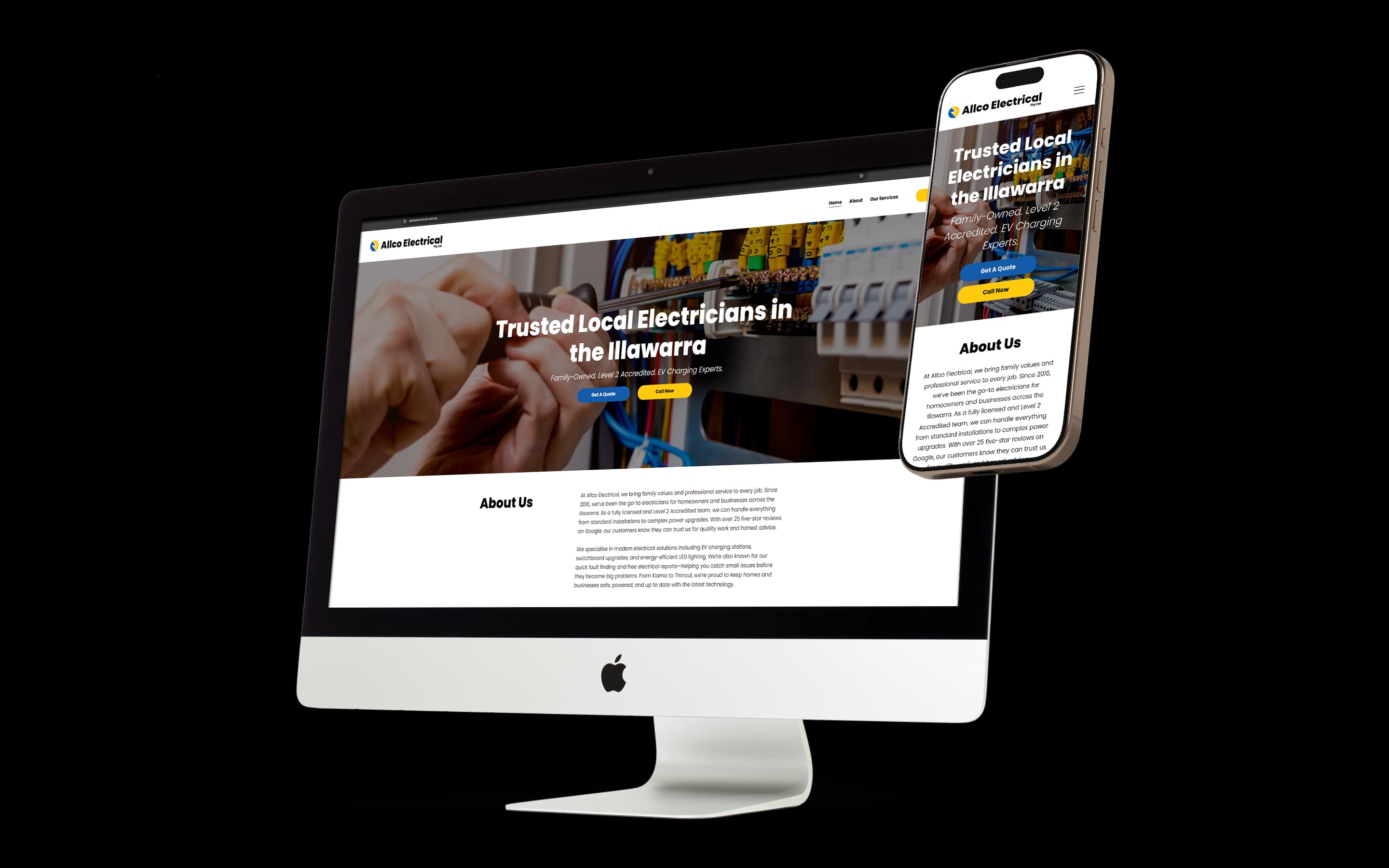
An electrician’s website we’ve built
Allco Electrical
Allco Electrical specialises in Level 2 accredited work and EV charger installation, so the site leads with that positioning instead of generic “reliable local electrician” copy — the exact detail a comparison-shopping customer is searching for. More than 25 five-star Google reviews are referenced directly on the homepage for verifiable trust, and a single-step quote form sits above the fold, because this category converts on speed.
Common mistakes on electrician websites
Treating it like a plumbing site
Built entirely for emergencies, which leaves the planned work — where the margin is — competing on nothing but who answers first.
One page listing twenty services
Every valuable search term crammed into one bullet list means ranking for none of them. Switchboard upgrades and EV chargers each deserve a page.
No mention of EV charging, or a single line
The category is growing fast, the customers research thoroughly, and most competitors have nothing. It’s the clearest open goal on most electricians’ sites.
Commercial capability hidden
Plenty of electricians do substantial commercial work and have a website that reads like a domestic call-out service. Commercial buyers assume you’re not equipped and move on.
No pricing guidance anywhere
Customers researching a rewire or a switchboard upgrade are trying to work out if it’s a $1,500 job or a $6,000 one. Refusing to indicate loses the enquiry to whoever will.
How much does an electrician’s website cost?
From $800Electrical sites often sit slightly above the entry point, because they benefit from more pages than most trades — the individual service pages for high-value work are usually what makes the site profitable, and each one is genuine design and writing.
If you’re purely domestic call-out work, a focused site at the lower end does the job. If you want to compete for EV, solar or commercial work, budget for the extra pages. They tend to pay for themselves quickly.
Frequently asked questions
What electrical business owners ask us most before getting a quote.
Yes, if you do meaningful amounts of both. They’re different buyers with different concerns, and one page trying to speak to both usually convinces neither.
For most electricians right now, it’s the single highest-return page we’d recommend. Growing demand, customers who research before calling, and very little competition on most local search results.
Yes, and we’ll check it with you before it goes live. We write the draft from a conversation with you, then you review anything technical. You’re not starting from a blank page, and nothing goes live that you haven’t approved.
If you’re CEC accredited it should be a prominent, separate page — the search behaviour is different again, and accreditation is a genuine filter customers use.
Two to four weeks for a standard build. A larger site with commercial sections and multiple service pages runs a little longer.
We build for other trades and service businesses too —
Win more of the work that's actually worth winning
Tell us what your business does and where the good jobs come from. We'll show you a homepage concept before you commit to anything.